Tywyn and Abergynolwyn – Communities Between the Mountain and the Sea
The history of Tywyn and Abergynolwyn is an integral part of the wider story of Meirionnydd – a story of landscape, labour, and the deep connection between people and the slate that shaped their lives.
The village of Abergynolwyn was established in the 1840s to house workers from Bryn Eglwys Slate Quarry, located in the hills of Cwm Fathew. From this quarry came slate that travelled far beyond Wales.
The rough slate was carried down steep inclines to reach the Talyllyn Railway at Nant Gwernol – the world’s oldest volunteer-run steam railway. From there, the slate travelled 7¼ miles through the valley to Tywyn, where it was loaded onto mainline trains and ships for export across the world.
The two communities, Abergynolwyn and Tywyn, therefore formed a living chain between the mountains and the sea – communities built on slate, hard work, and the railway that connected them.
The Wagon – A Recreation of Craftsmanship and Labour
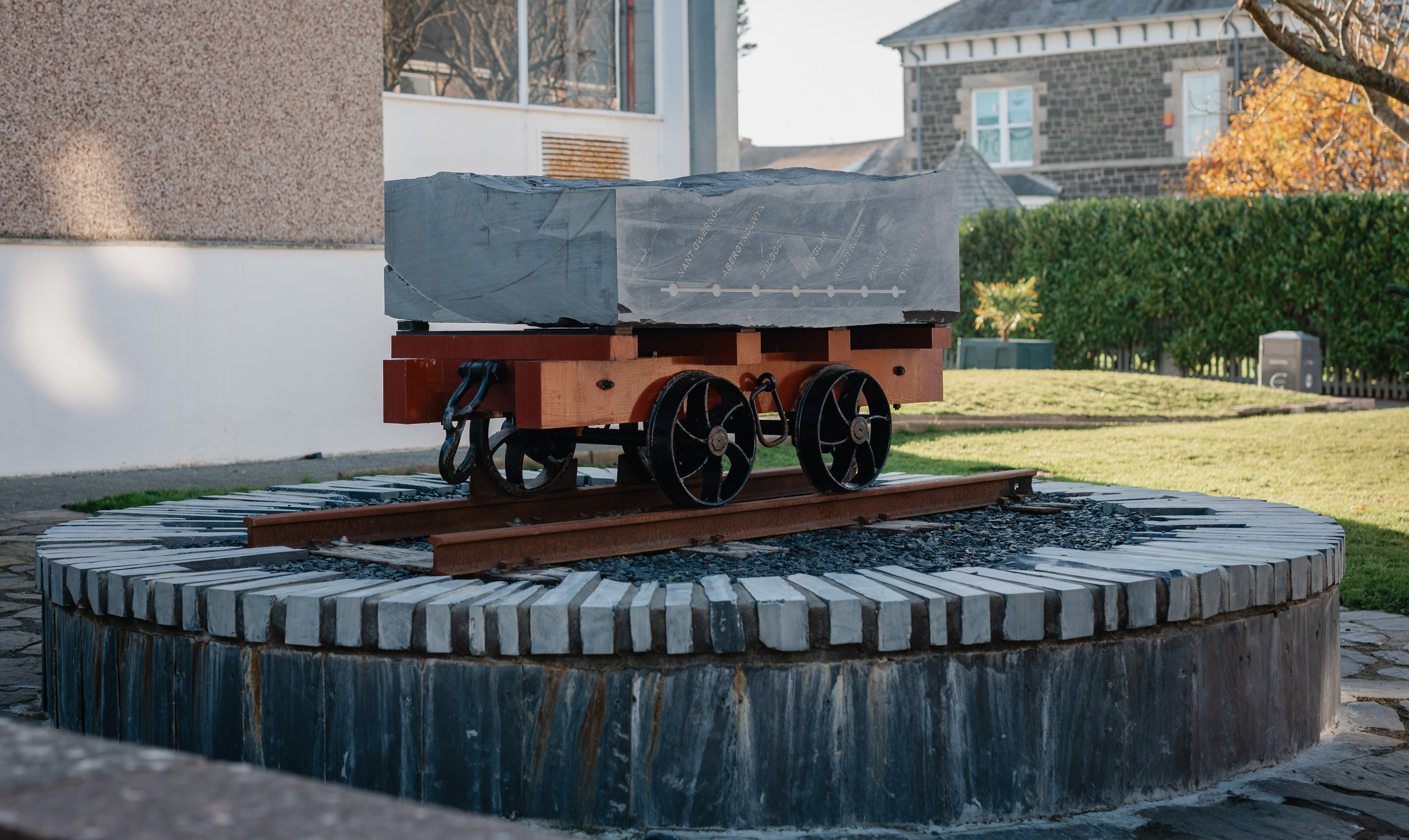
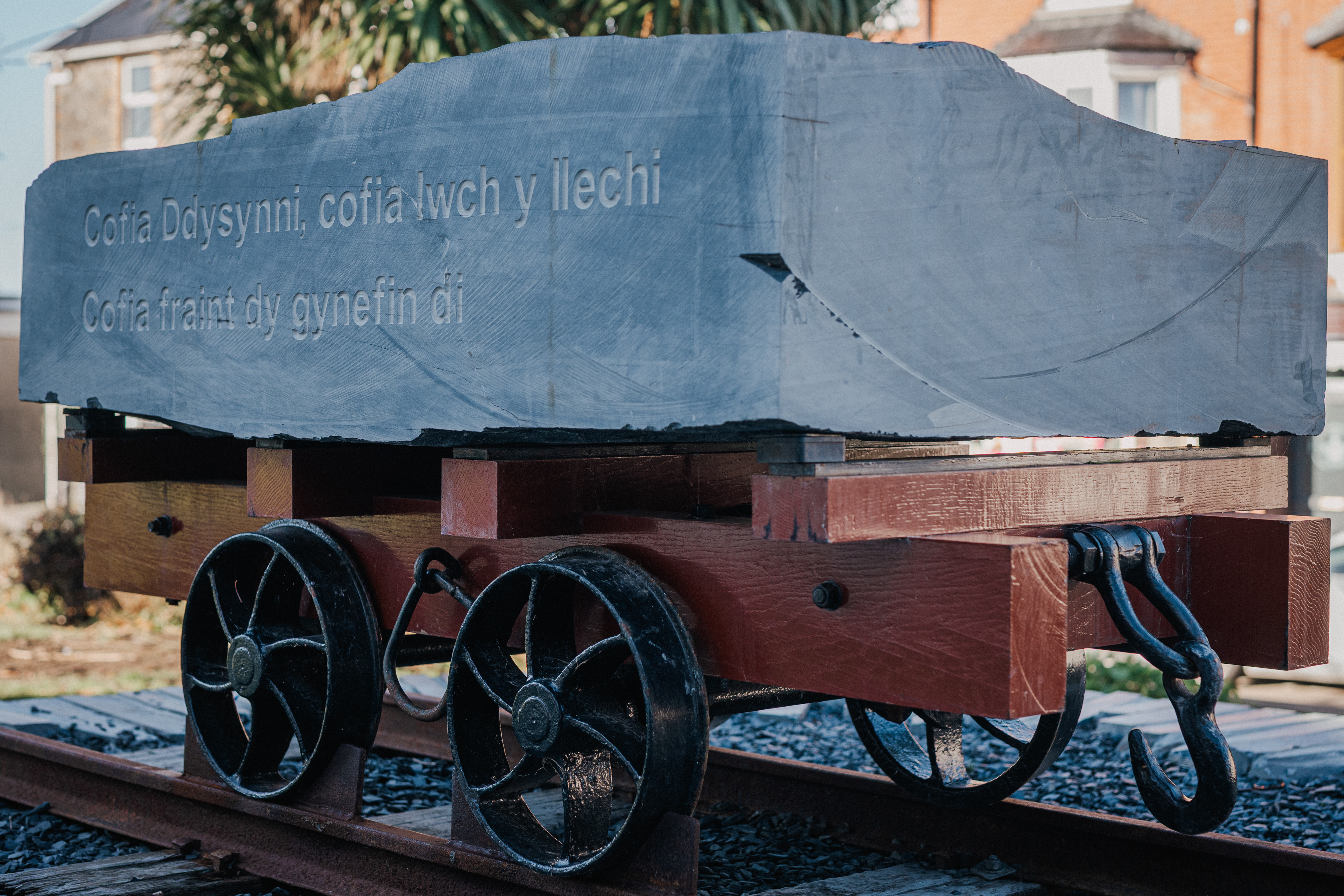
The art wagon standing in the centre of Tywyn, outside the town council offices, is a recreation of the slate slab wagons used at Bryn Eglwys Quarry. On one side are words engraved by Manon Steffan Ros, and on the other side you will see the names of Talyllyn Railway stations, showing the journey of the slate from the mountain to the sea.
For over 80 years, until the quarry closed in 1946 following a catastrophic collapse, these wooden and iron wagons – based on a design dating back to the late 18th century – were used to carry heavy slabs of uncut slate from deep within the mountain.
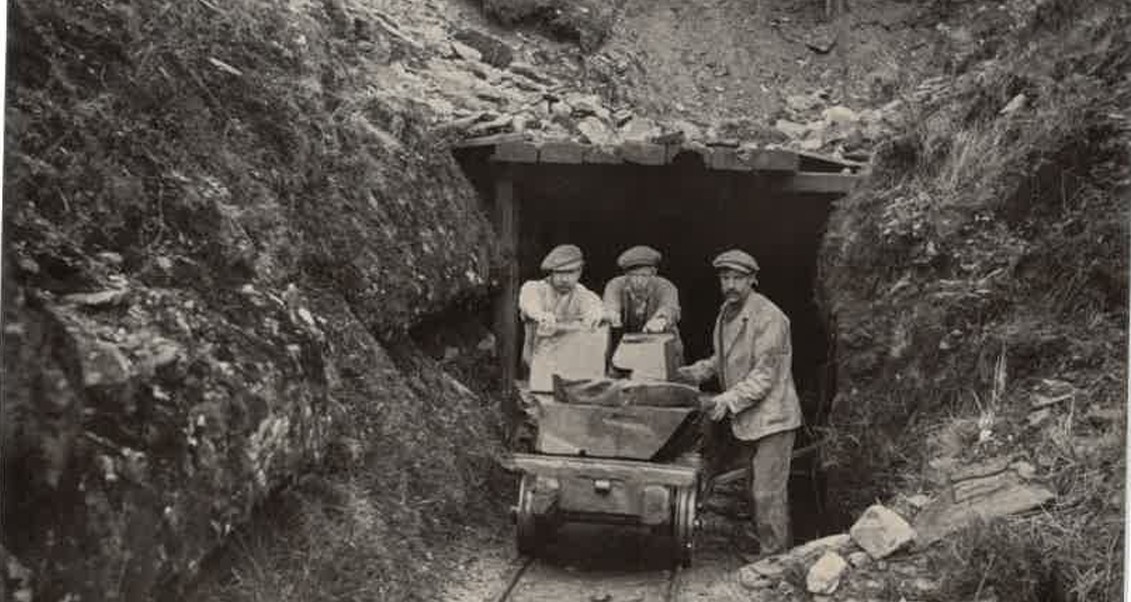
Although these wagons did not run on the Talyllyn Railway itself, their role was essential:
- transporting the rough slate from the quarry,
- delivering it to the cutting sheds,
- and beginning its long journey to the sea and to the wider world.
Today, the recreation stands as a symbol of the hard work, craftsmanship, and industrial history that shaped Tywyn and its surrounding communities.
The Slate – Words by Manon Steffan Ros
The words engraved on the slate of the Wagon – which was transported 38 miles from Ffestiniog Quarry – are original words by the Tywyn author, Manon Steffan Ros.
Manon is renowned for her ability to capture the essence of place and people, and her words on this wagon reflect memory, heritage, and belonging. They are a tribute to the quarrying communities who worked tirelessly to shape the landscape and local economy.
“Remember Dysynni, remember the dust of the slate, remember the privilege of your homeland.”
These words bridge the past and the present – reminding us of what once was, and of what continues to live on in the land, in the people, and in memory.
Words on the Street that bind Place, Language, and Memory
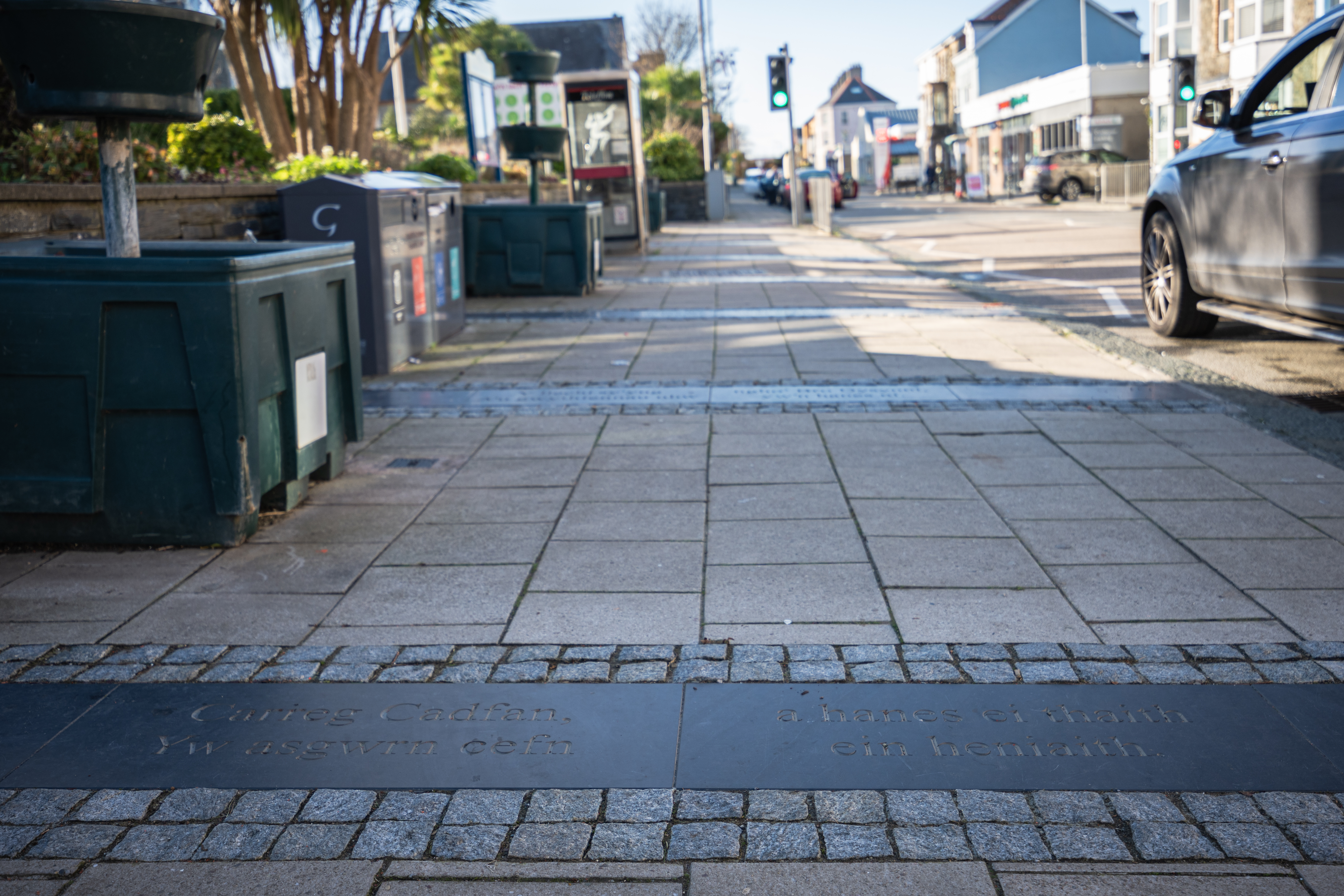
The words engraved on the pavements around the wagon are an integral part of the public artwork. They were written by the Tywyn author Manon Steffan Ros and reflect the deep relationship between the town, its history, and its people.
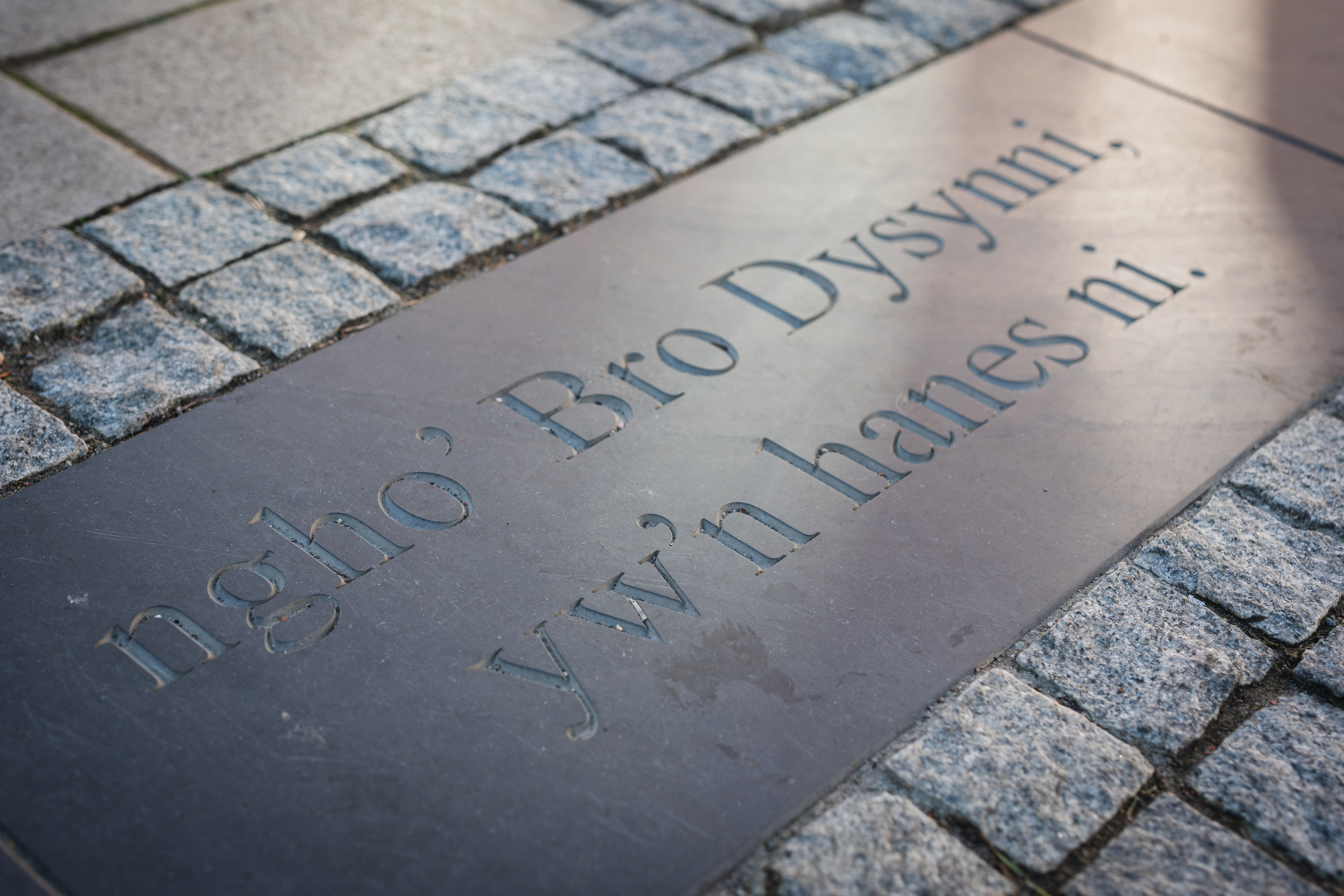
The words draw on the elements that define Tywyn: the slate, the sea, the railway, the sacred landscapes, and the vibrant community that lives here today. They create a trail of words that guides visitors through the story of the town, linking the past with the present.
Meaning of the words
"Carreg Cadfan, a hanes ei thaith / Yw asgwrn cefn, ein heniaith."
The reference to Carreg Cadfan connects Tywyn with its early Christian history. The stone, which stands in St Cadfan’s Church, is one of the oldest examples of written Welsh. These lines suggest that the stone — and the language carved into it — form the backbone of the area’s identity.
"Y llechi sy yng ngho’ Bro Dysynni, / A’u gwythiennau nhw yw’n hanes ni."
The slate is part of the valley’s DNA. The “veins” refer both to the mineral veins in the mountains and to the veins of history and memory that run through the community.
"Mae breichiau’r dre amdanynt yn dynn, / Rhwng fferm Penllyn a’r Morlyn."
The town embraces the land between the mountains and the sea. Penllyn and the Morlyn (Tywyn Lagoon) mark the natural boundaries that shape life in the town.
"Y cogie bech a’r lodesi, / Sydd pia fory’n Tywyn ni."
This is a reference to the town’s children — the next generation who will inherit the history, the land and the language. The words are full of warmth and belonging.
"Chwibian trên a sisial ton / Sy’n gyfeiliant i’r dref hon."
This describes the sound of Tywyn: the steam train of the Talyllyn Railway and the sound of the waves on Tywyn beach. Both are symbols of the connection between the mountains and the sea.
"Tre’n hanes ni, a’n ceraint. / Tre’n hufen ia, a swyn y saint."
The town is a mixture of the sacred and the everyday: from history and religion to the simple pleasures of seaside life. It is a place that truly belongs to its people.